
Entry 09: Death God (Thần Trùng)
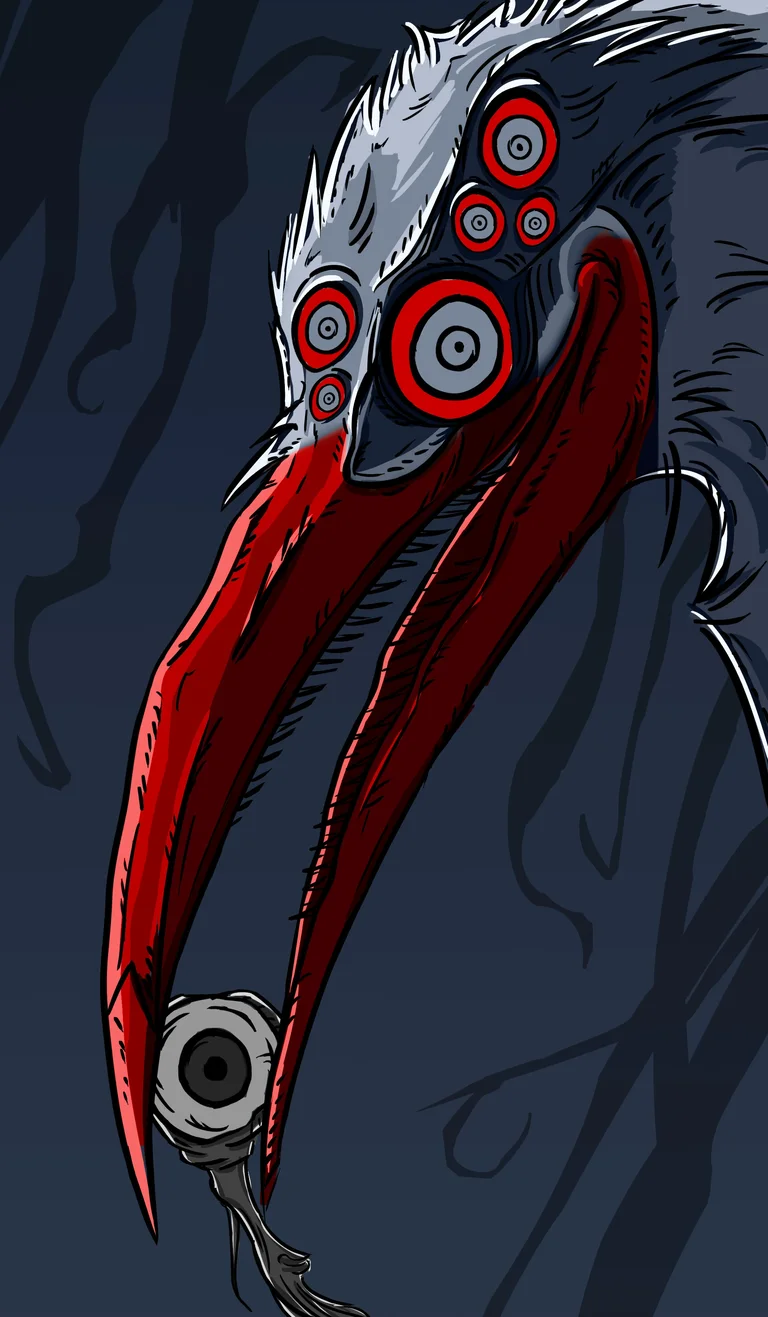
The Death God, or Red Beak Claw God, is a fierce demon from Vietnamese folk legends, originating from twelve northern demons locked in a wooden chest drifting to Giao Châu. They take the form of large birds with red beaks and claws, lurking for souls of the newly dead at cemeteries during the third watch, torturing them to drag along living relatives, causing the phenomenon of "Trùng Tang liên táng" - consecutive deaths in the family.
Cost: 3
|Health: 4
|Power: 5
Introduction
The Death God is a terrifying spiritual entity in Vietnamese folk beliefs, directly linked to the phenomenon of Trùng Tang or Trùng Tang liên táng, consecutive sudden unexplained deaths of relatives in the same family or lineage after someone has just passed away. Though there is no scientific evidence, beliefs about the Death God still exist deeply in culture, reflecting fear and efforts to explain consecutive tragic deaths. In folk tradition, the Death God is described as a fierce bird demon, specializing in lurking for souls of the newly departed to drag along other victims, turning one loss into an endless chain of tragedy. Oral stories about it not only sow terror but also remind people of the fragility of life, especially in moments of mourning.
According to folk beliefs, the Death God may be a bird demon with a red beak, or a group of twelve demons (Twelve Hour Gods) originating from the north, specializing in waiting for those who die during “poisonous hours” (Dần, Thân, Tỵ, Hợi) to capture and torture souls. This phenomenon usually occurs within 49 days or even three years after the first funeral, causing many families to fall into prolonged obsession.
Origin Of The Death God
The story of the Death God originates from an ancient legend passed down in Vietnamese folk tradition, linked to stories of fierce demons from the north flooding into Giao Châu land. Long ago, in the north there were twelve fierce demons, each ruling one hour of day and night, specializing in lurking to capture souls of the newly departed. They were suppressed by Taoists using the Thiên La Địa Võng method, locked tightly in a wooden chest and set adrift into the East Sea. Yet wind and waves pushed the wooden chest astray, drifting south and stuck along the coast of Giao Châu. A fisherman named Tín accidentally discovered it, thinking it contained treasures, eagerly opened the lid. Immediately, black energy surged up like dense fog, and twelve blazing red shadows shot up into the high sky, accompanied by terrifying cries like fierce birds in a midnight storm. From that moment, Vietnam reluctantly welcomed the “Death God”, a fierce force wandering between the realms of yin and yang.
This legend not only explains the appearance of the Death God but also emphasizes human helplessness before supernatural forces. It spreads through generations, becoming a warning about not violating strange objects from the sea, where the boundary between life and death is already fragile.
Form And Characteristics Of The Death God
The Death God, also called the Red Beak Claw God, carries the form of a terrifying giant bird, with a slender body like incense smoke after offerings, wings flapping without a sound in the night. Their beaks and claws are red like fresh blood, sharp enough to tear apart even souls. They usually appear during the third watch, when darkness covers the cemetery, perching silently on fresh graves. The sound of pecking echoes continuously from where the coffin is placed, blood soaking red the ground and making the earth bubble with a fishy stench, creating a scene that makes any witness’s neck hair stand on end.
In folk beliefs, the Death God is not a single entity but a collection of twelve demon gods, each representing one moment of day and night. They specialize in lurking for souls that have not yet reached the Underworld, thrusting their beaks through the coffin lid to pierce and pull them out of the body. The dead at that moment often moan endlessly, voices echoing in the wind sounding like the crying calls of the living, full of pain and despair.
Special Powers
The most terrifying power of the Death God lies in its ability to torture and spread death. After capturing a soul, they will whisper: “Your house, who else is blood related?” If the soul resists, the Death God does not hesitate to use fangs to gouge eyes, use beaks to cut tongues, brutally torturing until the victim blurts out the name of a living relative. That name spoken just once is enough for that life to be recorded in the death register, and three nights later, they will surely follow to the realm of death. That is why this phenomenon is called “Trùng Tang liên táng” in folk tradition, where one death drags the entire bloodline into an endless spiral of tragedy.
With health 4, damage 5, and summoning cost 3, the Death God in folk legends is likened to a fierce god hard to defeat, requiring complex rituals to suppress. Its “Fierce God” type emphasizes cruelty, making anyone involved face an inescapable chain of mourning.
Folk Stories About The Death God
The ancients often told chilling stories to illustrate the power of the Death God, and one of them still haunts to this day. One night, in Trà Viễn village, the Đỗ family had just buried their eldest son under pouring rain. The next night, pecking sounds echoed in wind and rain, followed by tiny, pitiful calls in the fields: “Mother… mother…” The next morning, the coffin had sunk deep into the earth, the lid cracked open as if torn from inside. The mother in the house was found sitting dead, eyes wide staring toward her son’s grave, her face still holding an expression of horror as if seeing the blazing red bird demon.
From that event, whenever there was a funeral in the village, no one dared approach the cemetery late at night. They believed that there were still those standing by graves, silently sharpening claws and waiting for relative names to be called, ready to drag another soul into death’s embrace. Stories like that are not just rumors but lessons about family bonds, where kinship can become a deadly burden under the Death God’s hand.
Methods To Resolve And Modern Beliefs
Though the Death God brings terror, Vietnamese folk tradition still has ways to resolve trùng tang, often combining Buddhist beliefs with ancient rituals. When suspecting signs, families will immediately send the deceased’s body to the temple for monks to chant sutras, pray for transcendence, and suppress with spells. Some places also perform “trùng tang resolution” ceremonies by making offerings at auspicious hours, avoiding poisonous hours like Dần, Thân, Tỵ, Hợi, while using items like rice and salt or spell leaves to drive away the bird demon.
In modern times, though science explains trùng tang through factors like epidemics or psychological stress, beliefs in the Death God still linger in rural areas, becoming an inseparable part of funeral culture. It reminds us that behind supernatural phenomena is the primitive fear of loss, and the best way to face it is through unity and faith in traditional values.